The anatomy
You already know how to dry a car.
The real question is why this towel finishes the job in a single pull. Here's what's actually doing the work.
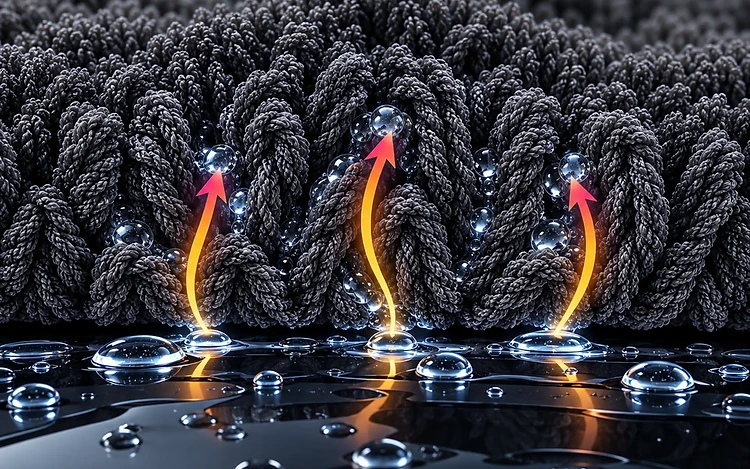
Twisted-loop weave
Long, spiral-shaped fibers reach into the water film and draw it up into the loop, instead of skating across the panel and leaving trails behind.
Dense construction
More fiber per area means more moisture captured per pass, so you can keep going before the towel needs wringing.
Generous footprint
A single sheet drapes across a panel, so you cover more surface in fewer passes and reduce the chance of re-wetting an area you already dried.
Double-sided surface
Two plush faces give you a clean surface to flip to before the towel is loaded—no need to stop and wring halfway through a panel.
Stitched edges
Folded, stitched borders keep loose fibers tucked in so the edge itself isn't dragging across your paint as you pull.
Paint-gentle finish
A soft, no-pressure pull is designed for coatings, wraps, and PPF. Confirm compatibility with your coating or film manufacturer.
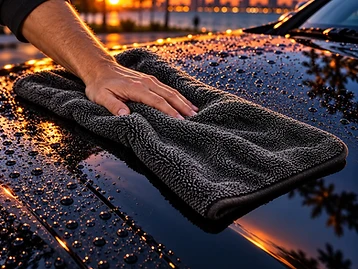
Lay, pull, finish.
Lay it flat, guide it across the panel with almost no pressure, and the twisted-loop construction lifts the water off the paint instead of pushing it around. That's the whole technique.
You don't need to scrub or press hard. The towel does the holding; you just guide it across the surface.